If your water heater is not heating and shows a blocked-intake message, it needs a diagnosis that matches its exact model. A restricted air intake may prevent a gas water heater from operating, but the message alone does not establish which part needs attention. It also does not automatically mean the entire heater needs replacement.
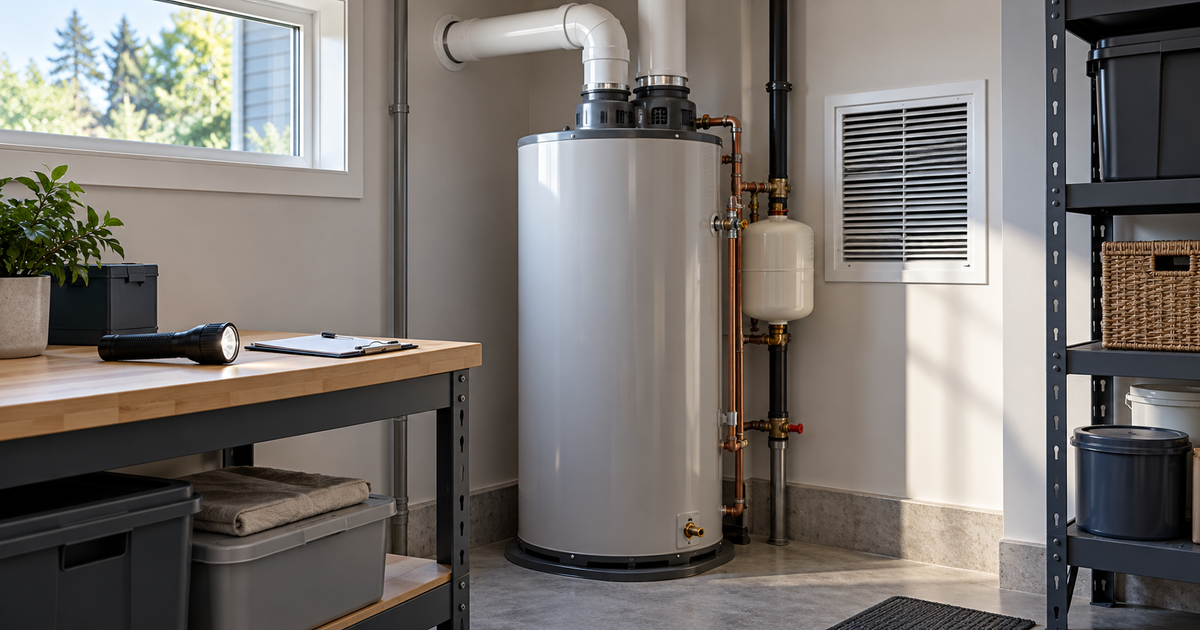
An ACCU Plumbing service visit in Blue Springs, Missouri, illustrates that distinction. The recorded problem was no heat from an A. O. Smith Polaris water heater. Inspection found a clogged intake filter. After servicing the filter and reinstalling the intake components, the technician tested the system and recorded proper operation at completion.
For homeowners, the useful lesson is straightforward: start with the symptom and the equipment information, then let inspection determine the repair.
What a blocked-intake message can mean
An air intake supplies air to equipment designed to use it during combustion. On applicable gas water heaters, the intake and exhaust arrangements are part of the appliance’s operating and safety systems.
A blocked-intake message is a diagnostic clue. Its meaning, checks, and service procedure depend on the appliance model and the manufacturer’s instructions. It should not be treated as a universal instruction to remove a filter, change a switch, or reset the heater.
A. O. Smith’s Polaris product literature provides access to installation and service information for that product family. However, the correct manual must match the installed unit. A manual for another Polaris generation is not a substitute for identifying the equipment.
The Blue Springs water-heater repair example
The homeowner’s complaint was that the water heater was not heating. The equipment displayed a blocked-intake code, giving the technician a starting point for inspection.
The documented sequence was:
Identify the equipment as an A. O. Smith Polaris water heater.
Investigate the no-heat condition and blocked-intake message.
Find a clogged intake filter.
Disconnect the intake, clean the filter, and reinstall the components.
Test the system after service.
The work record states that the filter was vacuumed and blown clean. That describes what occurred on this particular visit. It is not a recommended homeowner procedure, and it does not establish that the same cleaning method is permitted for every filter or model.
The technician also recommended keeping a replacement intake filter available. Any replacement should match the equipment’s requirements rather than simply resemble the existing part. At completion, the heater was operating properly.
Why diagnosis should come before replacement
Losing hot water can make replacement feel inevitable. This example shows why it helps to separate the complaint from the cause.
The complaint was no heat. The finding was a clogged intake filter. The work performed addressed that finding, and testing confirmed operation at the end of the visit.
That sequence supports a repair discussion. It does not prove that every heater with the same symptom can be repaired economically, or that replacement is always unnecessary.
A different home may have different equipment, damage, installation conditions, or service history. A useful recommendation should explain what was found, what work is proposed, and what remains uncertain.
When discussing repair versus replacement, ask which findings support each option. Avoid comparing only the immediate price without understanding the scope, limitations, and condition of the existing unit.
ACCU Plumbing’s water heater services provide a relevant starting point for homeowners seeking an equipment assessment.
What to record before contacting a plumber
You do not need to troubleshoot the appliance yourself to provide helpful information. A clear description can make the initial conversation more productive.
If it is safe to observe the equipment without opening covers, record:
The brand and model from an accessible label.
The exact wording on the display.
Any numerical code, including punctuation or letters.
Whether the problem is constant or intermittent.
When you first noticed the loss of hot water.
Any recent service or changes near the equipment.
Photographing a visible display can be more reliable than remembering that it showed an intake warning. Share equipment photos through the service provider’s agreed process, without including unrelated household information.
Also explain whether all hot-water fixtures are affected. A shower-only complaint is different from a home-wide loss of hot water, even when both initially sound like a water-heater problem.
If you cannot safely reach the label, say so. Equipment identification should not require climbing, moving the appliance, or disturbing venting.
What homeowners should avoid
This case involves a combustion-air component. It should not become a do-it-yourself guide to dismantling an intake assembly.
Avoid removing or modifying intake piping, bypassing switches, changing wiring, or repeatedly resetting the heater in an attempt to force operation. Follow the instructions supplied for the installed appliance and arrange appropriate service when the fault persists.
Do not assume that a video showing a similar-looking heater applies to yours. Small differences in model, fuel type, components, and installation can change the correct procedure.
Similarly, do not purchase a replacement filter based only on a photograph or approximate dimensions. Ask for confirmation of the required part.
Keeping the area accessible for service is useful. Moving stored belongings away from the working area can help, provided you do not touch the appliance or its connections. Leave equipment adjustments and internal inspection to the person performing the service.
Questions to ask during the visit
An understandable explanation matters as much as a technical term. Ask the technician to connect the observed symptom with the actual finding.
Useful questions include:
What did you find that explains the no-heat condition?
Does the displayed code identify a cause or only a condition?
Which manufacturer instructions apply to this unit?
What was serviced, and what was left unchanged?
What testing was completed afterward?
What should I report if the problem returns?
Ask whether any maintenance recommendation is specific to the installed model and the home’s conditions. A recommendation from one service visit should not automatically become a universal calendar for every household.
If another issue is suspected, request a clear explanation of the next diagnostic step. There is a difference between a confirmed finding and a possibility that still needs investigation.
Maintenance advice should match the appliance
The Blue Springs technician recommended having a replacement intake filter available. That is a useful case-specific context, but it does not establish a general replacement interval.
Use the applicable documentation and the service provider’s equipment-specific recommendations to plan maintenance. Keep the model information, service date, findings, and recommended parts together for future reference.
A simple service record can prevent confusion later. It helps distinguish a repeat of the same message from an unrelated issue and gives the next technician a more accurate history.
If a warning returns, record the message again rather than assuming the previous repair failed for the same reason. Similar symptoms can require a fresh assessment.
Keep the repair explanation with your records
Before the appointment ends, ask for a brief written description of the finding and the work performed. Retain any equipment-specific maintenance recommendation alongside it.
If the household has more than one decision-maker, share that explanation so everyone understands what was established. A note about a serviced intake filter should not become a claim that the entire heater was rebuilt or that replacement will never be needed.
This is also a useful opportunity to clarify which parts, if any, should be kept available and who should install them. Clear records support future service without requiring the homeowner to interpret technical details from memory.
Ask which symptoms would justify another call, and keep those instructions accessible to everyone responsible for the home’s maintenance.
Frequently asked questions
Does a blocked-intake code mean I need a new water heater?
Not necessarily. In this case, the technician found a clogged intake filter and restored operation after service. Replacement decisions still depend on the individual heater’s condition and inspection findings.
Can I clean the intake filter myself?
Use the instructions for your exact model and ask the service provider which maintenance tasks are intended for the owner.
Did cleaning permanently solve this customer’s problem?
The record establishes proper operation at completion. It does not document a long-term follow-up, so a permanent outcome should not be claimed.
Should I keep resetting the heater?
Follow the appliance’s instructions. Repeated resets are not a substitute for identifying why the fault appears, especially when the same message returns.
Request water-heater help in Blue Springs
When hot water stops, a clear diagnosis helps you understand the available options. The Blue Springs example shows how a specific finding can lead to targeted service without assuming replacement first.
If you need water heater repair in Blue Springs, contact ACCU Plumbing and describe the equipment, displayed message, and affected fixtures. Same-day appointments may be available; call to check.