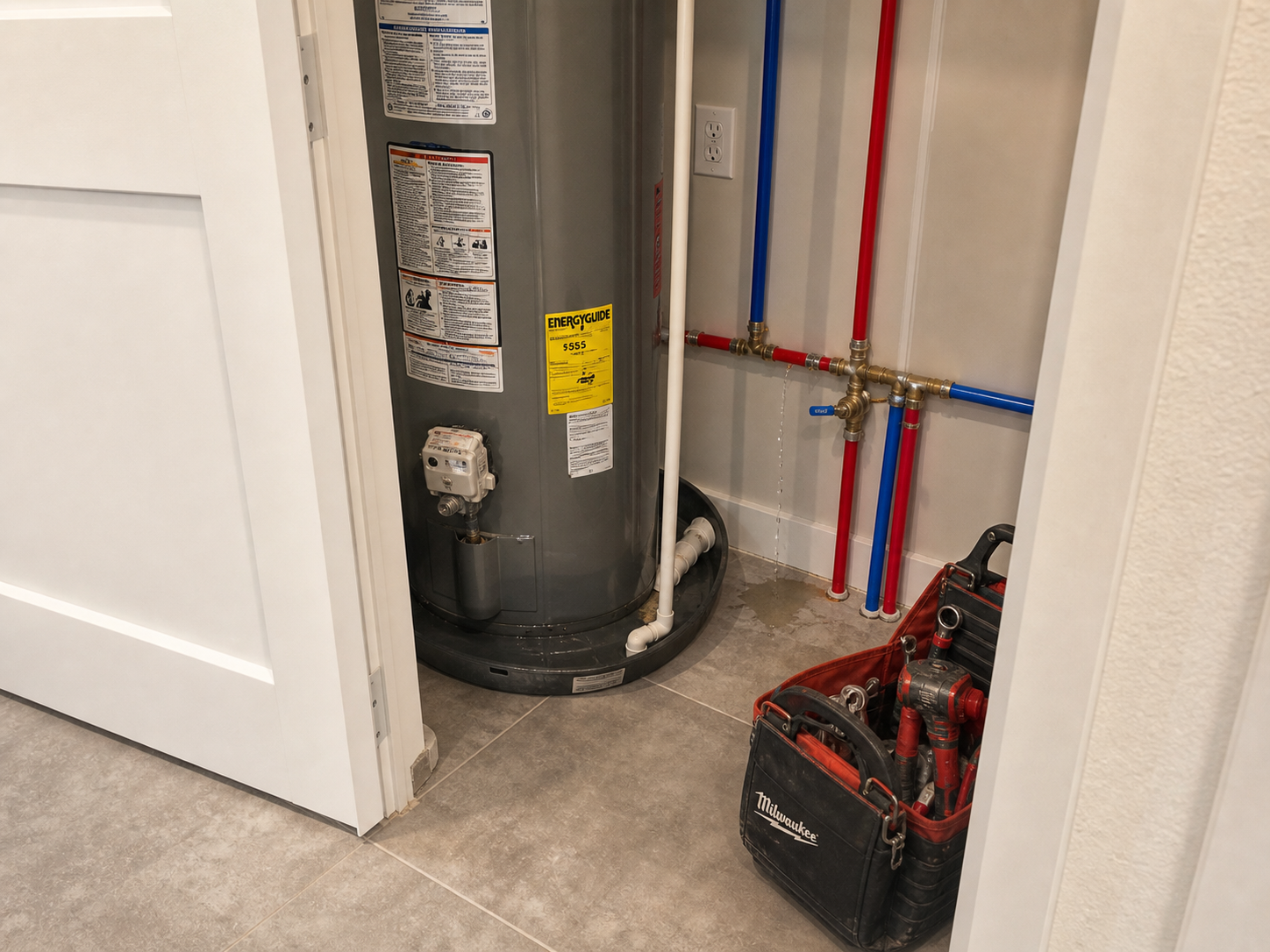
If you notice water around your water heater, it is important to act quickly. A leak may come from a loose connection, a valve, condensation, or a failing water heater tank. Some causes can be repaired, while others may require water heater replacement.
Homeowners often search, “Why is my water heater leaking?” because water at the base of the unit can be difficult to trace. Water may run down the outside of the tank from a connection above it, or it may be coming from the tank itself.
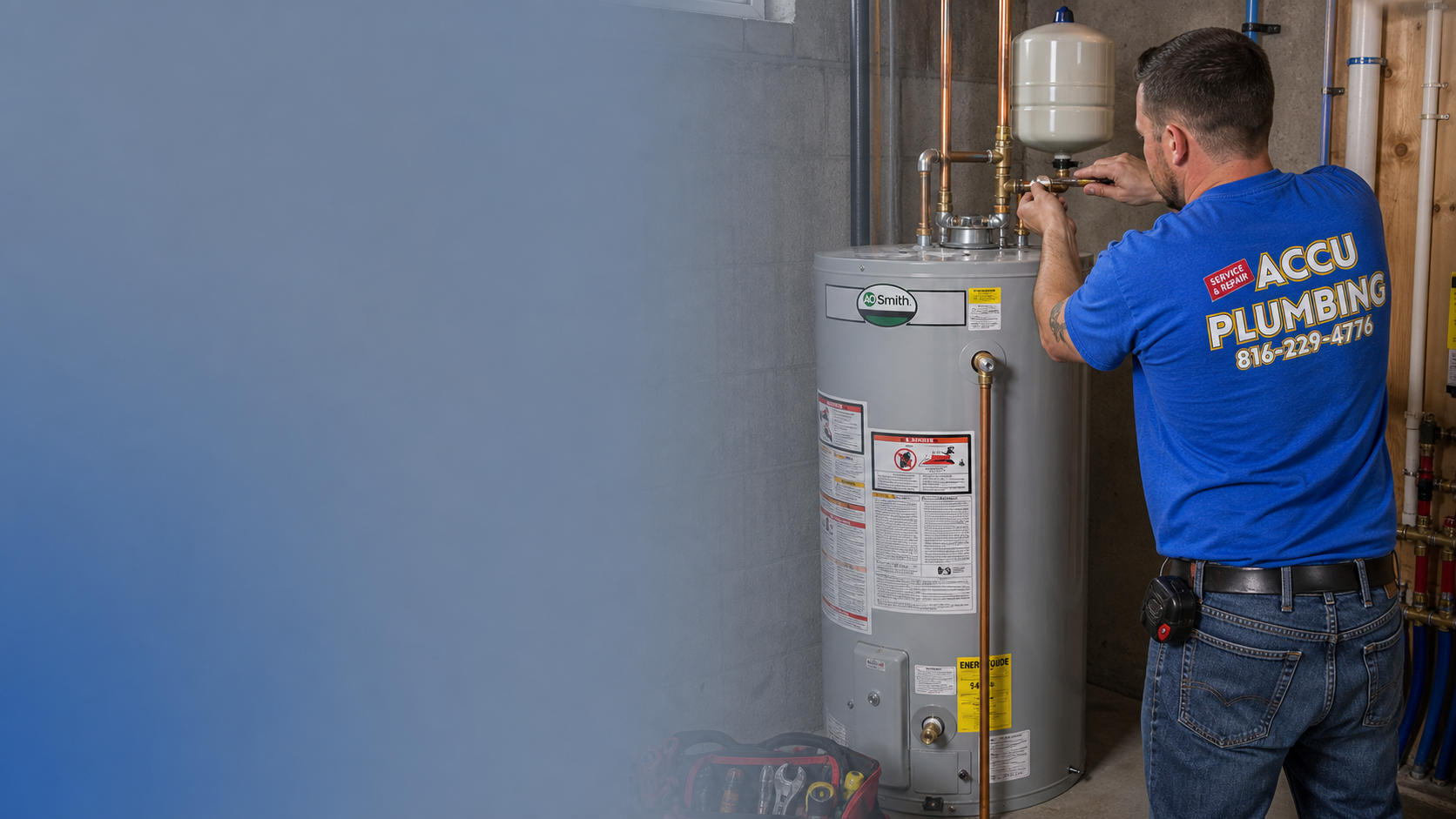
The first priority is safety. If the leak is significant, water is spreading, or the water heater is located near electrical equipment, contact a professional plumber promptly. For homeowners who need plumbing repair in Blue Springs, Missouri, a professional inspection can identify the source of the leak and recommend the appropriate repair or replacement option.
Quick Answer: What Does Water at the Bottom of a Water Heater Mean?
Water around a water heater may be caused by:
- A leaking pipe connection
- A temperature-and-pressure relief valve issue
- A leaking drain valve
- Condensation
- A nearby appliance or plumbing leak
- An overflowing drain pan
- Internal tank corrosion
- A failed water heater tank
A leak from a valve, fitting, or pipe may be repairable. A leak from the tank itself is more serious because it often means the tank has corroded or failed internally.
Do not assume the source of the water based only on where it appears on the floor. A water heater inspection can determine whether the unit can be repaired or needs replacement.
What Should You Do First if Your Water Heater Is Leaking?
If you see water around the water heater, take these steps:
- Keep children and pets away from the area.
- Avoid touching electrical components or standing water near an electric water heater.
- If water is spreading, move nearby belongings away from the area if it is safe to do so.
- Look for the source without removing panels or attempting repairs.
- If you can safely identify the water shutoff valve above the unit, turn off the water supply to the heater.
- Contact a licensed plumbing professional for leaking water heater repair.
If you smell gas, hear a hissing sound near a gas appliance, or suspect a gas-related issue, leave the area and contact the gas utility or emergency services according to local safety guidance. Do not attempt to repair gas connections yourself.
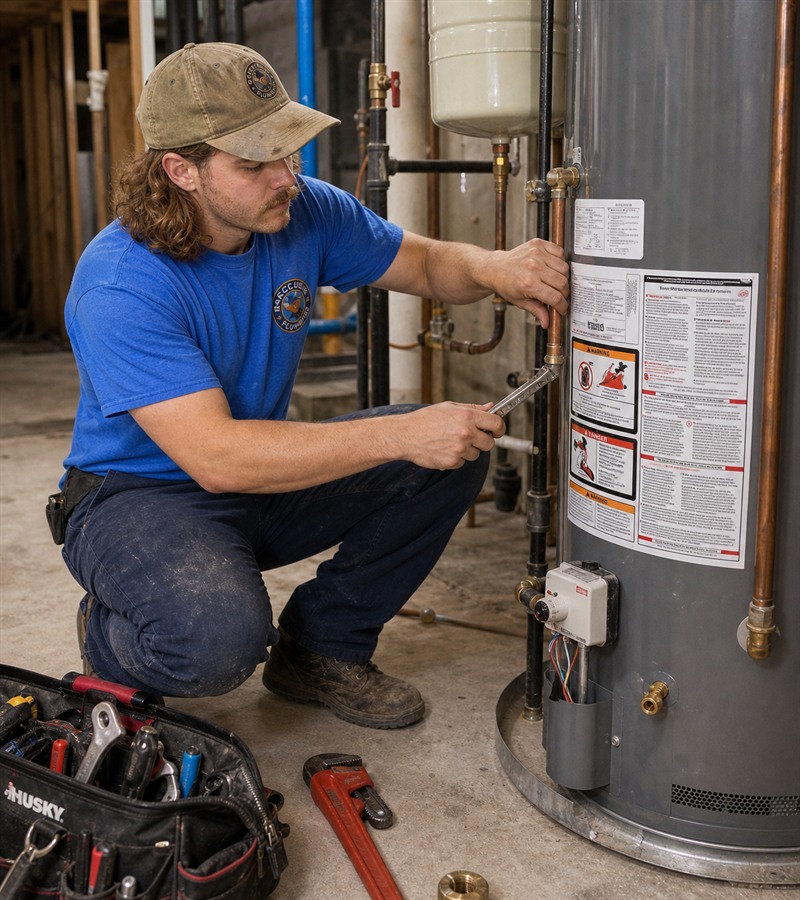
A small drip can still indicate a problem that needs attention. Waiting may allow water damage, corrosion, or a complete tank failure to develop.
1. A Pipe or Plumbing Connection May Be Leaking
One of the more repairable causes of water around a water heater is a leaking pipe connection.
Cold-water supply pipes and hot-water outlet pipes connect at the top of the unit. If a connection is loose, corroded, or damaged, water may drip down the side of the tank and collect at the bottom. This can make it look like the tank itself is leaking.
Signs of a connection leak may include:
- Water or mineral residue near the top of the unit
- Drips from a fitting or pipe
- Moisture running down the exterior of the tank
- Rust or corrosion around a connection
- Water appearing only while hot water is being used
A plumber can inspect the connection, determine the cause, and recommend the appropriate repair. Even a small connection leak should be addressed because ongoing moisture can damage nearby materials and contribute to corrosion.
2. The Temperature-and-Pressure Relief Valve May Be Releasing Water
Most water heaters have a temperature-and-pressure relief valve, often called a T&P valve. This safety component is designed to release water if temperature or pressure inside the tank becomes too high.
The valve is usually located on the side or top of the unit and connects to a discharge pipe. If the valve releases water, the water may travel down the pipe and collect near the bottom of the water heater.
A T&P valve may leak because of:
- A worn or faulty valve
- Excessive water pressure
- Temperature concerns
- A problem with the water heater’s controls
- A problem with the home’s plumbing system
Do not cap, block, or remove the discharge pipe. The relief valve is an important safety component. A plumber should inspect the valve and identify why it is releasing water before replacing parts or making adjustments.
3. The Drain Valve May Be Dripping
The drain valve is located near the bottom of a traditional tank-style water heater. It is used during maintenance or when draining the tank.
If the drain valve is loose, worn, damaged, or not fully closed, it may drip slowly. Because the valve is close to the floor, the leak may look like it is coming from the bottom of the tank.
A leaking drain valve may be repairable, but the exact approach depends on the valve type, condition, and water-heater setup. It is best to have a plumber inspect the valve rather than forcing it closed or attempting to remove it while the unit is full of hot water.
4. Condensation May Be Creating Water Around the Unit
In some cases, water around a water heater is condensation rather than a plumbing leak.
Condensation can form when a cold tank or cold pipes are exposed to warm, humid air. This may be more noticeable during humid weather or when the unit has recently filled with cold water.
Condensation is usually temporary and should not cause a steady stream of water. If water keeps appearing, the area remains wet, or there are signs of dripping from a specific component, a leak is more likely.
A water heater inspection can help distinguish between condensation and an active plumbing problem.
5. The Drain Pan May Be Overflowing
Some water heaters are installed in a drain pan. The pan is designed to catch small leaks and direct water to an appropriate drain line.
If the pan is holding water or overflowing, it may indicate:
- The water heater is leaking
- A drain line is clogged or disconnected
- The pan is damaged
- Condensation or water from another source is collecting in the pan
The drain pan does not solve the cause of the leak. It simply helps limit water damage. If there is water in the pan, the source should be identified promptly.
6. A Nearby Appliance or Plumbing Fixture May Be the Source
Water may collect near the water heater even when the unit is not the source.
For example, the problem may come from:
- A nearby washing machine connection
- A water softener
- A furnace humidifier
- A utility sink
- A floor drain backup
- A pipe inside a wall or ceiling
- Condensation from another appliance
This is another reason professional diagnosis is helpful. The visible puddle does not always identify the actual source of the water.
A plumber can inspect the water heater, nearby plumbing, and the surrounding area to determine whether the leak is connected to the unit or another part of the home’s plumbing system.
7. The Water Heater Tank May Have Failed
A failed water heater tank is one of the most serious reasons for water collecting at the bottom of the unit.
Traditional tank water heaters hold and heat water inside a metal tank. Over time, internal components and the tank itself can deteriorate. Sediment, corrosion, age, water conditions, and heavy use can all affect the condition of the tank.
When the tank develops an internal leak, water may escape through the bottom or lower portion of the unit. This type of leak usually cannot be corrected by replacing an external valve or fitting.
Signs that the tank may be failing include:
- Water coming directly from the body of the tank
- Rust or corrosion on the tank exterior
- A leak that continues after nearby fittings are dry
- Repeated hot water problems
- Rust-colored water
- Rumbling or popping noises
- An aging water heater with a history of repairs
If the tank is leaking, water heater replacement is often the most dependable solution. Continuing to use a failed tank can increase the risk of a larger leak and property damage.
How a Plumber Finds the Source of the Leak
A professional water heater inspection helps identify the cause before repair or replacement is recommended.
During an inspection, a plumber may:
- Ask when the leak started and how quickly it is spreading
- Inspect the unit’s age and overall condition
- Check top connections, valves, and nearby plumbing
- Look for corrosion, mineral buildup, and moisture patterns
- Examine the temperature-and-pressure relief valve and discharge pipe
- Inspect the drain valve and drain pan
- Check whether the tank itself appears compromised
- Evaluate hot water performance and other reported symptoms
- Explain whether a repair is likely to provide a reliable solution
The goal is to determine whether the leak is isolated and repairable or whether the water heater has reached the point where replacement is more practical.
Can You Keep Using a Leaking Water Heater?
It is not a good idea to ignore a water heater leak. Even a small amount of water can lead to flooring damage, mold concerns, corrosion, or a larger failure.
Whether the unit can remain in use while awaiting service depends on the source and severity of the leak. A plumber can give guidance based on the specific condition of the unit.
If water is actively leaking, pooling quickly, or creating an electrical or property-damage concern, contact a professional promptly. Avoid trying to patch a tank or use chemical sealants. These temporary measures do not address internal tank failure and may make future service more difficult.
How to Help Prevent Future Water Heater Leaks
Not every leak is preventable, but regular attention can help identify developing problems early.
- Check the area around the unit periodically for moisture.
- Watch for rust, corrosion, or mineral buildup around fittings.
- Respond to changes in hot water temperature or unusual noises.
- Keep the area around the water heater accessible for inspections.
- Follow manufacturer maintenance guidance for your specific model.
- Schedule professional service when you notice a new leak or declining performance.
A professional can also recommend maintenance steps based on the unit’s age, type, and condition.
Frequently Asked Questions About Leaking Water Heaters
Why is my water heater leaking from the bottom?
Water may be coming from the drain valve, drain pan, a pipe connection, the relief valve discharge pipe, condensation, or the tank itself. A professional inspection can identify the source.
Is a leaking water heater an emergency?
It can be. Call promptly if water is spreading, the leak is significant, the unit is near electrical equipment, or there are signs of a failed tank. If you smell gas, leave the area and contact the gas utility or emergency services.
Can a leaking water heater be repaired?
Leaks from fittings, valves, pipes, or external components may be repairable. A leak from the storage tank itself usually requires replacement.
How do I know if my water heater tank has failed?
Signs may include water leaking directly from the tank body, corrosion, an aging unit, repeated hot water problems, rust-colored water, or a leak that continues after connections and valves are inspected.
What causes a water heater tank to fail?
Internal corrosion, sediment buildup, age, water conditions, and normal wear can contribute to tank deterioration over time.
Schedule Leaking Water Heater Repair in Blue Springs
Water around a water heater should not be ignored. The source may be a repairable valve, fitting, or drain issue, but it may also indicate a failed water heater tank that requires replacement.
For leaking water heater repair and plumbing repair in Blue Springs, Missouri, contact ACCU Plumbing to schedule a water heater inspection. Their team can identify the source of the leak, explain your repair or replacement options, and help protect your home from further water damage.