When a sewer line develops a problem, the first question is often whether it can be repaired or needs to be replaced. For homeowners searching for sewer line repair in Blue Springs, the right answer depends on the condition of the pipe, the location and severity of the damage, the age of the system, and whether the problem is isolated or recurring.
A small, accessible defect may be a good candidate for sewer repair. A line with multiple cracks, severe root intrusion, repeated backups, major deterioration, or a collapse may require partial or full sewer line replacement.
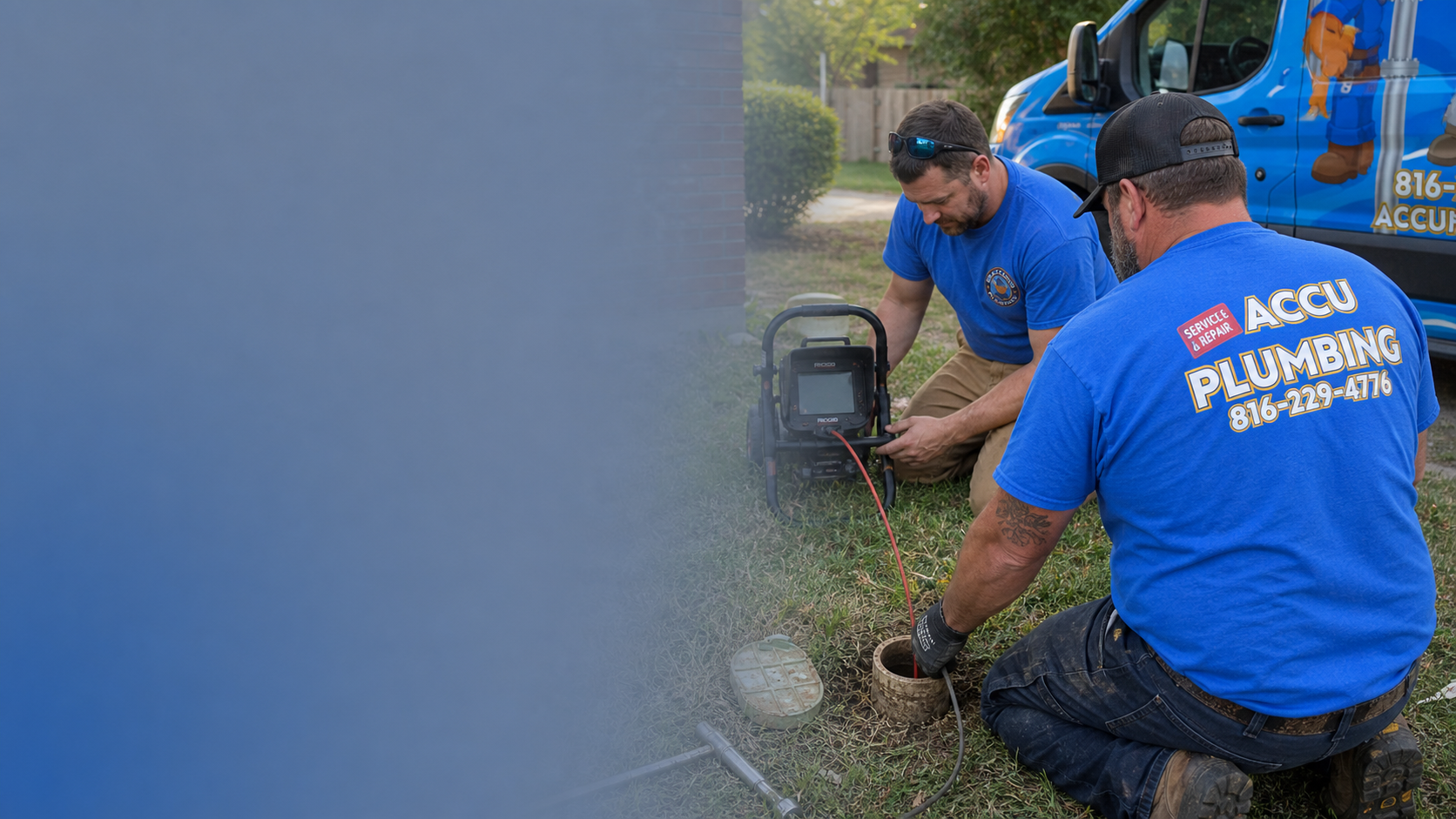
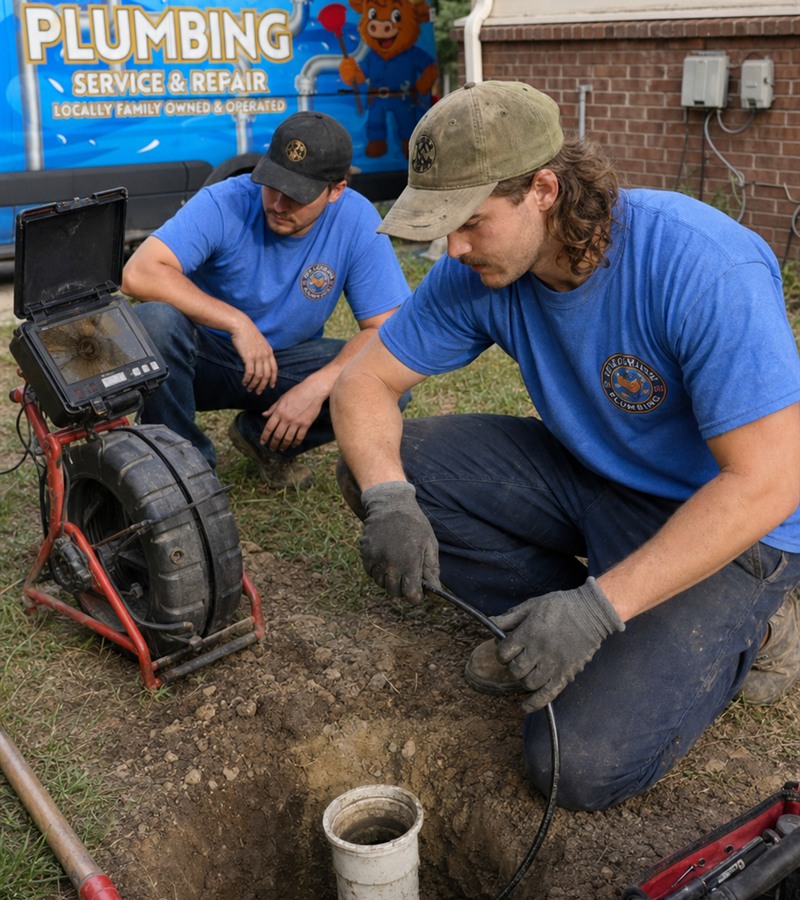
The most reliable way to decide is through professional sewer diagnostics. A camera inspection can identify what is happening inside the pipe and help determine whether a targeted repair will provide a dependable solution or whether replacement is the better long-term investment.
Quick Answer: Repair or Replace?
Sewer line repair may be appropriate when:
- Damage is limited to one section of pipe
- The line is otherwise in good condition
- A crack, separation, or root entry point can be repaired
- The problem can be reached without replacing a large portion of the line
- The pipe does not show widespread deterioration
Sewer line replacement may be appropriate when:
- The pipe has collapsed or is severely damaged
- Multiple sections are cracked, offset, or deteriorated
- Tree roots repeatedly return because the pipe is compromised
- Backups continue after professional cleaning and repair
- The line is old, failing in several places, or no longer reliable
The goal is not simply to choose the least expensive immediate option. It is to choose the solution that addresses the actual condition of the residential sewer line and reduces the chance of repeated disruptions.
Why an Accurate Diagnosis Matters
A sewer problem can create slow drains, recurring clogs, sewage odors, gurgling fixtures, water backups, and damage to the home. However, the same symptoms can result from very different causes.
For example, a main line clog caused by roots or buildup may be cleared with professional cleaning. A line that continues to clog because of broken joints or a collapsed section will need more than repeated cleaning.
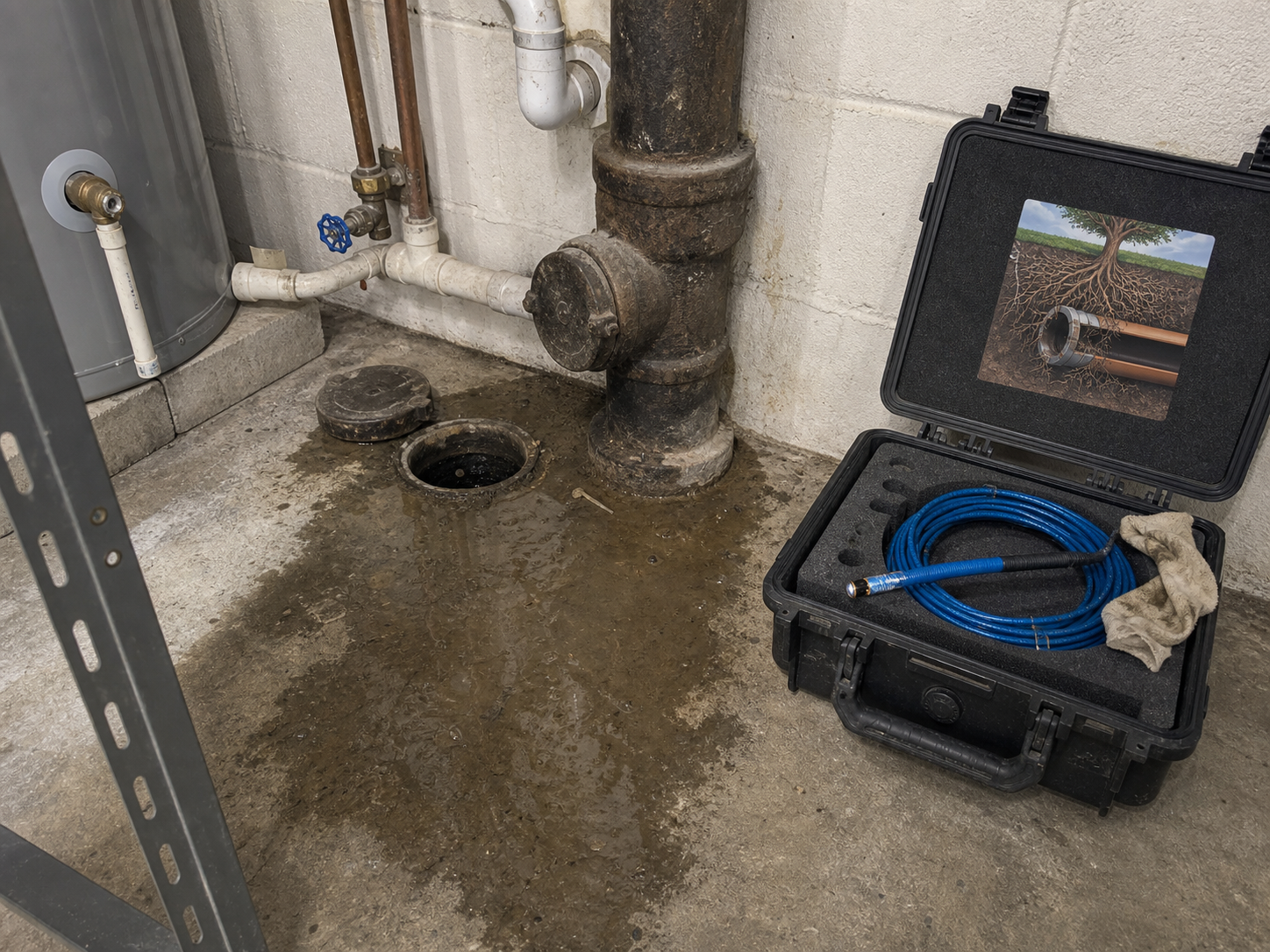
That is why sewer diagnostics should come before a major repair decision. A plumber may use a video camera to inspect the inside of the pipe and look for:
- Root intrusion
- Cracks and breaks
- Separated pipe joints
- Offset sections
- Pipe corrosion or deterioration
- Standing water in low areas of the line
- Heavy buildup
- Foreign objects
- A crushed or collapsed pipe
A camera inspection does not automatically mean the sewer line needs replacement. It provides evidence that helps identify the source of the issue and the most appropriate sewer repair option.
When Sewer Line Repair May Be the Right Choice
Sewer repair is often a practical option when the damage is limited, the rest of the line remains sound, and the repair can address the underlying problem.
One Isolated Crack or Broken Connection
A broken sewer pipe does not always require replacement of the entire line. If a camera inspection identifies one cracked section, separated joint, or damaged connection, a plumber may be able to repair that specific area.
Targeted repair can be a good option when the surrounding pipe is in usable condition. The important question is whether the repair will solve the problem for the long term or only postpone a larger failure.
Root Intrusion in a Limited Area
Tree roots can enter sewer pipes through cracks, loose joints, or separated connections. If roots are limited to one section and the pipe is otherwise in good condition, cleaning and repair may be enough to restore reliable drainage.
However, roots are often a symptom of an opening in the pipe. Removing them may improve flow, but the line should be evaluated for damage that could allow roots to return.
A Localized Pipe Offset
Pipes can shift over time due to soil movement, settling, age, or previous construction work. A small offset may sometimes be repaired if it is limited to one section and does not indicate more widespread pipe failure.
The camera inspection helps show whether the misalignment is isolated or part of a larger pattern affecting the line.
A Repairable Section With Good Access
The location of the damage matters. If an isolated issue can be accessed without major disruption to the home, driveway, landscaping, or foundation, repair may be the most efficient choice.
Your plumber should explain where the damaged section is located, how the repair would be performed, and whether the rest of the line appears likely to cause future problems.
When Sewer Line Replacement May Be the Better Option
Sewer line replacement is usually considered when repairs would be temporary, when damage affects multiple parts of the pipe, or when the line has reached the end of its useful life.
Repeated Backups and Recurring Clogs
A sewer backup that happens more than once is a sign that the issue may be more than ordinary buildup. If professional cleaning provides only short-term relief, the pipe may have structural problems that keep trapping debris or restricting flow.
Recurring clogs can be caused by:
- Roots growing into damaged pipe
- Cracked or separated joints
- Pipe sections that have shifted out of alignment
- Severe internal deterioration
- A low or sagging section that collects waste
- A partially collapsed pipe
In these situations, replacing a failing section or the full line may be more practical than repeatedly paying for temporary solutions.
A Collapsed or Severely Damaged Pipe
A collapsed sewer pipe cannot be restored through drain cleaning alone. Severe breaks, crushed sections, major corrosion, or extensive deterioration often require replacement.
A camera inspection can help locate the damaged area and show whether the problem is isolated or affects a larger portion of the line.
Multiple Damaged Sections
If the pipe has several cracks, offsets, root entry points, or deteriorated areas, repairing one spot may not provide lasting value. The line may continue to fail in other areas shortly after the first repair is completed.
When damage is widespread, replacement can reduce the cycle of repeat clogs, emergency calls, and property disruption.
Older Sewer Pipe Materials
Some older homes may have sewer lines made from materials that are more vulnerable to cracking, corrosion, root intrusion, or deterioration over time. Age alone does not mean a line must be replaced, but it should be considered alongside the inspection results.
A plumber can explain the apparent condition of the existing pipe and whether targeted repair is reasonable or whether replacement offers a more dependable long-term solution.
Sewer Repair vs. Replacement Comparison
| Consideration | Sewer Line Repair | Sewer Line Replacement |
|---|---|---|
| Best for | Isolated, repairable damage | Widespread, severe, or repeated damage |
| Pipe condition | Most of the line is still sound | Multiple areas are failing or deteriorated |
| Root intrusion | Limited roots with a repairable entry point | Recurring roots caused by extensive pipe damage |
| Clogs and backups | Infrequent and tied to one repairable issue | Recurring after cleaning or previous repairs |
| Scope of work | Repairs one damaged area | Replaces part or all of the line |
| Long-term goal | Restore a sound line with a targeted solution | Eliminate a failing line that is no longer reliable |
The right solution depends on the camera findings, not on a one-size-fits-all rule.
What Sewer Diagnostics Can Reveal
Professional sewer diagnostics help remove uncertainty from the decision-making process. A plumber can inspect the line with a camera and, when needed, use locating equipment to identify the approximate position of an issue above ground.
This process can help determine:
- Whether the blockage is inside the home or farther out in the sewer line
- Whether roots are entering through damaged joints
- Whether a problem is limited to one area
- Whether the pipe has significant corrosion or deterioration
- Whether a repair can be targeted
- Whether replacement is likely to prevent repeated failures
Accurate diagnosis can also help avoid unnecessary excavation. If a problem is localized, the repair can be focused on that section. If the line is broadly compromised, the homeowner can make a more informed decision about replacement.
What Are the Available Sewer Repair Options?
The appropriate repair method depends on the line’s condition, accessibility, material, and location.
Traditional Excavation
Traditional sewer repair involves accessing the damaged pipe through excavation. This may be necessary when a pipe is severely collapsed, inaccessible by other methods, or requires removal and replacement.
While excavation can affect landscaping or hard surfaces, it may be the most effective method for certain types of damage.
Spot Repair
A spot repair addresses one damaged section of pipe. This may be appropriate for a localized break, separation, or other defect when the remaining line is in good condition.
Spot repair can be a practical option when a camera inspection confirms that there are no major issues elsewhere in the pipe.
Partial Sewer Line Replacement
When a larger section is damaged but the rest of the line remains reliable, partial replacement may be considered. This option replaces the failing portion without replacing the entire residential sewer line.
Trenchless Sewer Repair Options
In some situations, trenchless methods may be available. These approaches can reduce the amount of excavation required, but they are not appropriate for every pipe condition or property layout.
A professional evaluation is necessary to determine whether trenchless sewer repair is feasible and whether it will provide a durable result.
Questions to Ask Before Approving Sewer Work
Before choosing between sewer line repair and replacement, ask your plumber:
- What did the camera inspection show?
- Is the issue isolated or present in multiple areas?
- Can I see the video footage or receive a clear explanation of the findings?
- Will cleaning alone solve the problem?
- If repaired, what is the condition of the remaining pipe?
- What could cause the problem to return?
- Is partial replacement an option?
- Would trenchless repair be appropriate for this line?
- What disruption to the yard, driveway, or home should I expect?
- What warranty applies to the recommended work?
A trustworthy recommendation should explain why a particular option is being suggested. Homeowners should understand the condition of the line, the expected scope of work, and the likely long-term result before making a decision.
How Can You Reduce Future Sewer Problems?
Not every sewer issue can be prevented, especially when pipes are old or damaged. However, good habits can reduce avoidable blockages and help protect the line.
- Keep grease, oil, and fats out of kitchen drains.
- Avoid flushing wipes, paper towels, hygiene products, or other non-flushable items.
- Schedule service when drains begin slowing rather than waiting for a complete backup.
- Pay attention to gurgling fixtures, recurring clogs, and sewage odors.
- Consider a camera inspection after repeated main-line issues.
- Keep records of past sewer cleanings, inspections, and repairs.
Homes with mature trees or a history of root intrusion may benefit from periodic evaluation, particularly when drainage symptoms begin to return.
Frequently Asked Questions About Sewer Repair and Replacement
Can a broken sewer pipe be repaired without replacing the whole line?
Sometimes. If the damage is limited to one section and the remaining pipe is in good condition, a targeted repair or partial replacement may be possible.
How do plumbers know whether the sewer line needs replacement?
A sewer camera inspection helps identify cracks, roots, deterioration, pipe separation, offsets, standing water, and collapsed sections. The findings help determine whether repair is likely to be durable.
Is sewer line replacement always disruptive to the yard?
Not always. The level of disruption depends on the repair method, the pipe location, access conditions, and whether trenchless options are appropriate. Your plumber can explain the expected scope before work begins.
Can tree roots cause a sewer line to need replacement?
Yes. Roots can repeatedly enter through damaged joints or cracks. If the pipe has extensive root damage or multiple compromised sections, replacement may be the more reliable solution.
When is sewer damage an emergency?
Call promptly if sewage is backing up into the home, multiple fixtures stop draining, a floor drain overflows, or wastewater creates a health or property-damage risk.
Schedule Sewer Line Repair in Blue Springs
Choosing between sewer line repair and replacement starts with knowing what is happening inside the pipe. A camera inspection and professional sewer diagnostics can identify whether the issue is isolated, recurring, or part of a larger failure.
For sewer line repair in Blue Springs, contact ACCU Plumbing to schedule an inspection. Their team can evaluate the condition of your residential sewer line, explain your sewer repair options, and recommend a practical solution based on the actual problem.