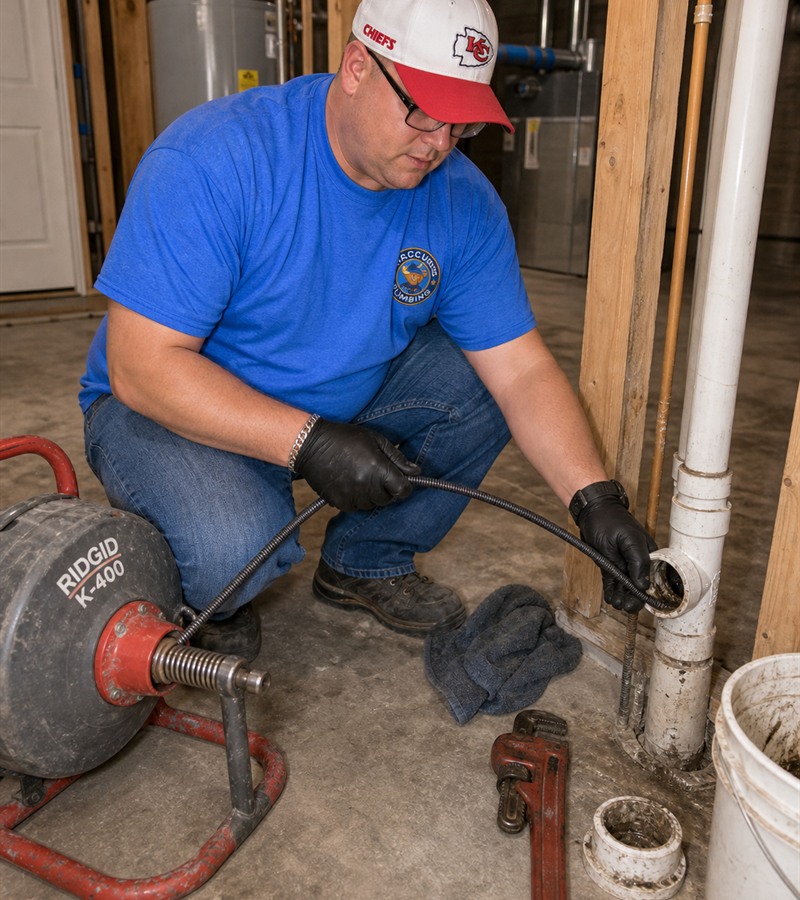
Slow drains, recurring clogs, gurgling sounds, unpleasant odors, water backups, and several fixtures draining poorly at the same time are common signs that your drains may need professional cleaning.
One slow sink may be caused by a small, localized blockage. However, symptoms that return, worsen, or affect multiple fixtures can point to a deeper problem in the home’s drainage system or main sewer line.
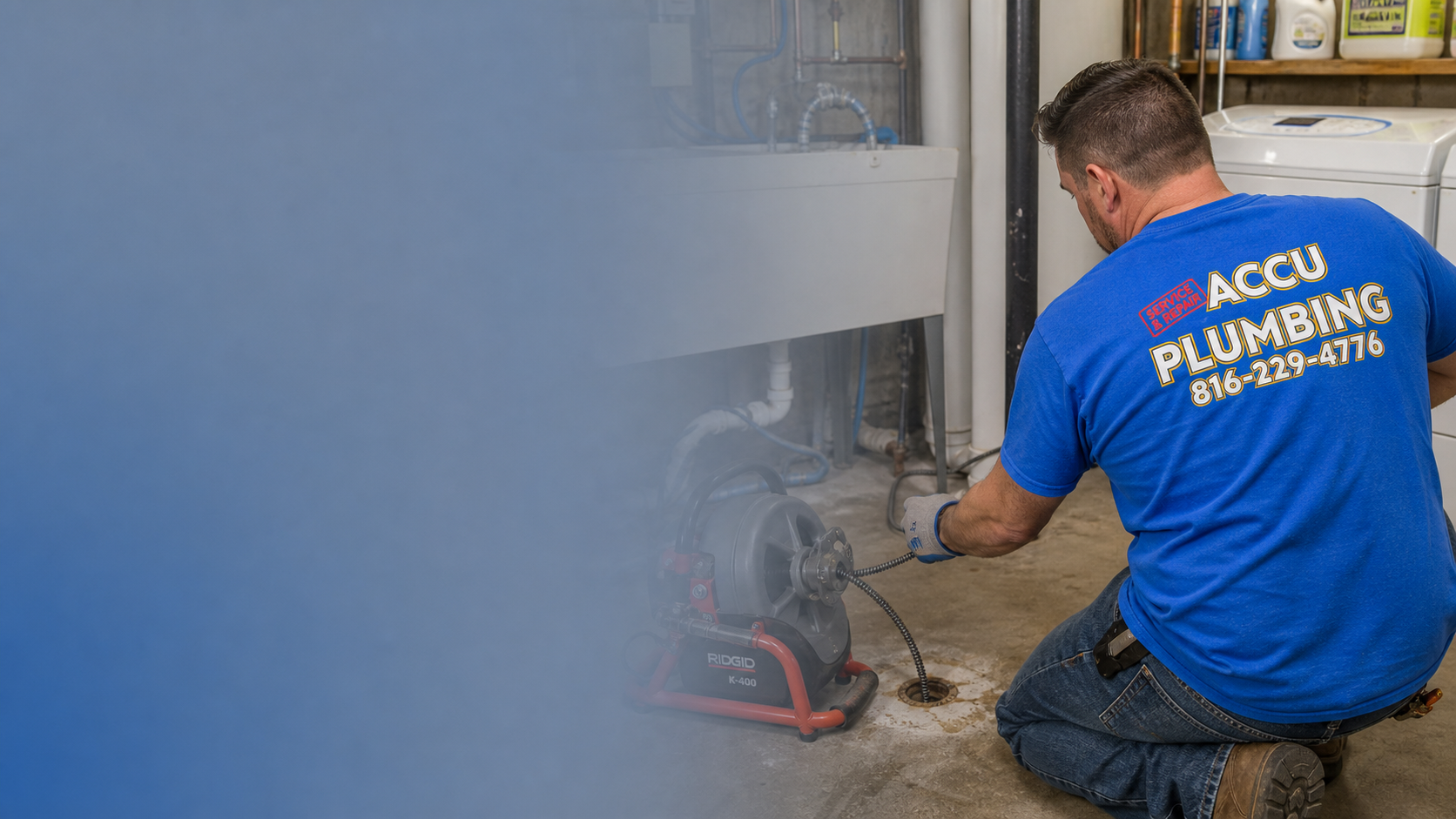
For homeowners in Blue Springs, Missouri, addressing drain issues early can help reduce the risk of complete blockages, wastewater backups, water damage, and more disruptive repairs.
Quick Answer: When Should You Call a Plumber?
Schedule professional drain cleaning or diagnosis when you notice:
- A drain that stays slow after basic cleaning
- A clog that repeatedly returns
- Gurgling from drains or toilets
- Persistent unpleasant odors
- Water backing up into another fixture
- Multiple drains becoming slow at once
- DIY methods providing only short-term relief
A qualified plumber can determine whether the issue is a simple buildup near one fixture or a larger concern involving a branch drain or sewer line.
Why Drain Problems Should Not Be Ignored
Drain problems often develop gradually. Hair, soap residue, grease, food particles, mineral buildup, and other debris can collect inside pipes over time. As the opening inside the pipe becomes narrower, water drains more slowly and additional debris becomes easier to trap.
A partially blocked drain may continue working for weeks or months. That can make the issue seem minor even while the restriction is growing.
The right response depends on several factors:
- Which fixture is affected
- How long the problem has been occurring
- Whether the issue keeps returning
- Whether multiple fixtures are involved
- The age and condition of the plumbing
- Whether mature trees are near the sewer line
- Whether the home has experienced a previous sewer backup
Minor surface clogs can sometimes be handled with basic maintenance. Recurring, widespread, or worsening symptoms should be professionally evaluated.
1. Water Is Draining More Slowly Than Usual
Slow drainage is one of the earliest signs of a developing clog.
A bathroom sink may take longer to empty, water may pool in the shower, or a kitchen sink may hold water before it starts draining. These changes often happen gradually, so it is easy to overlook them at first.
Common Causes of Slow Drains
Possible causes include:
- Hair and soap residue in bathroom drains
- Grease and food particles in kitchen drains
- Mineral buildup inside pipes
- Debris in laundry or utility drains
- A developing obstruction farther down the line
- Tree roots entering a damaged sewer pipe
One slow drain often indicates a blockage near that fixture. Several slow drains at the same time may indicate a restriction in a shared branch line or the main sewer line.
When to Schedule Service
Consider professional service if the drain continues slowing down, the issue returns after basic cleaning, or more than one fixture is affected. Responding early is usually easier than waiting for a complete blockage.
2. The Same Clog Keeps Coming Back
A recurring clog is a strong sign that the obstruction has not been fully removed or that an underlying problem is present.
A plunger or small drain snake may create a temporary opening through a blockage. Water begins flowing again, but grease, soap buildup, hair, or other debris may remain on the pipe walls. That remaining material can collect new debris and quickly cause another clog.
Why Recurring Clogs Matter
Repeated clogs can indicate:
- Heavy buildup inside the pipe
- A blockage farther down the drain line
- A damaged or misaligned pipe
- Poor drainage caused by an underlying plumbing issue
- Root intrusion in the sewer line
- An obstruction in a shared branch or main line
The same fixture clogging repeatedly should not be treated as routine maintenance. It is a reason to identify the cause rather than rely on repeated temporary fixes.
3. You Hear Gurgling From Drains or Toilets
Gurgling often means air is struggling to move through the drainage system.
Your plumbing system relies on proper airflow to allow wastewater to move smoothly. When a pipe is partially blocked, air may become trapped or redirected through nearby fixtures. This can create bubbling or gurgling sounds in sinks, tubs, showers, or toilets.
When Gurgling Is Most Noticeable
You may hear gurgling when:
- A toilet is flushed
- A washing machine drains
- A nearby sink is used
- The dishwasher empties
- Another fixture is running
An occasional brief sound is not always serious. Frequent or worsening gurgling, especially when paired with slow drainage, odors, or backups should be investigated.
Could Gurgling Point to a Sewer Issue?
It can. When several fixtures gurgle or react to one another, the problem may be in a shared drain or the main sewer line.
For example, flushing a toilet may cause bubbling in a bathtub drain, or a washing machine may cause a nearby floor drain to gurgle. These interactions suggest that the restriction may extend beyond one fixture.
4. Unpleasant Odors Are Coming From the Drain
Persistent drain odors can indicate trapped debris, organic buildup, stagnant water, or a sewer-related concern.
Kitchen drains may smell when grease and food residue collect in the line. Bathroom drains may develop odors from hair, soap, body oils, and other buildup. A rarely used floor drain can also smell if its drain trap has dried out and allows sewer gas into the home.
Common Drain Odors
Homeowners may notice:
- Sour or musty smells
- Rotten-food odors
- Sewage-like odors
- Odors that become stronger while water is running
- Smells that return soon after cleaning
Running water into a rarely used fixture may restore a dry drain trap. However, persistent or widespread odors should not be ignored.
When Odors Need Professional Attention
Schedule an evaluation when:
- The odor affects several drains
- The smell returns repeatedly
- Slow drainage is also present
- Gurgling or bubbling occurs
- Wastewater has backed up
- The odor resembles sewage
Drain cleaning may remove odor-causing buildup, but symptoms involving several fixtures may require sewer-line diagnosis.
5. Water Is Backing Up Into a Sink, Tub, or Floor Drain
Water backing up is one of the clearest signs of a significant drain restriction.
A backup happens when wastewater cannot move through the drainage system and starts moving toward another opening. You may see water rising in a sink, bubbling into a bathtub, or overflowing from a floor drain.
What the Backup May Indicate
The location of the backup can offer useful clues:
- Water backing up in one sink may indicate a localized clog
- Water appearing in a tub when a toilet is flushed may indicate a shared drain issue
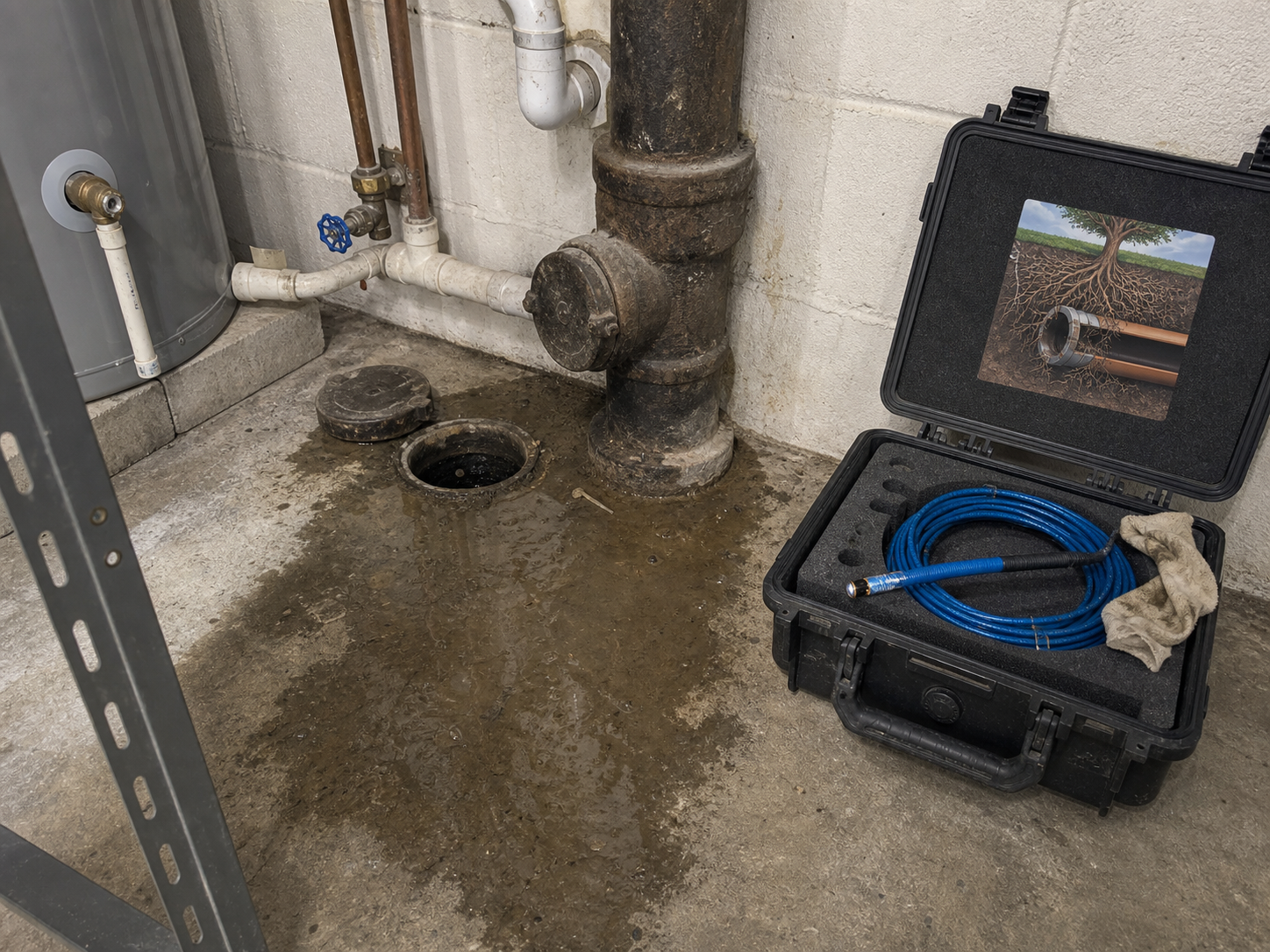
- A floor drain overflowing when the washing machine runs may point to a deeper restriction
- Several fixtures backing up may indicate a main sewer line blockage
Wastewater backups can create unsanitary conditions and damage flooring, cabinets, walls, and personal belongings. They should be addressed promptly.
When Is a Backup an Emergency?
Contact an emergency plumber when:
- Sewage is entering the home
- Multiple fixtures stop draining
- A floor drain is overflowing
- Water is spreading across floors
- Toilets cannot be used safely
- The problem threatens property or household safety
6. Several Fixtures Are Draining Slowly at the Same Time
One slow fixture often suggests a localized clog. Multiple slow fixtures are more concerning because they may share the same restricted line.
You may notice that:
- The toilet, tub, and shower all drain poorly
- Multiple bathroom sinks are slow
- The kitchen sink and laundry drain are both affected
- Fixtures on the lowest level of the home back up first
- Using one fixture affects another
Why Multiple Slow Drains Matter
When several fixtures are involved, the blockage may be located in:
- A shared branch drain
- A larger household drain line
- The main sewer line
- An underground pipe affected by roots or shifting soil
This is usually not a problem to treat one fixture at a time. Professional diagnosis can determine whether the issue is ordinary buildup, a deeper obstruction, or structural sewer damage.
When a Sewer Inspection May Be Needed
A sewer camera inspection may be appropriate when multiple drains are slow, clogs return after cleaning, or symptoms suggest a larger problem.
Possible sewer-line concerns include:
- Tree root intrusion
- Cracked pipe sections
- Separated joints
- Offset pipes
- Collapsed sections
- Heavy internal buildup
- Foreign objects lodged in the line
Drain cleaning can restore flow when buildup is the issue, but it cannot repair a broken, separated, or collapsed sewer pipe.
7. DIY Methods Provide Only Temporary Relief
Removing visible hair, cleaning a drain screen, or using a plunger may help with a minor surface clog. However, a problem that returns quickly or affects several fixtures usually requires more than a surface-level solution.
When Basic DIY Maintenance May Help
Homeowner maintenance may be reasonable when:
- The clog is minor and isolated
- Visible hair or debris can be safely removed
- The drain has only recently slowed
- No other fixture is affected
- There is no sewage odor or wastewater backup
When Professional Diagnosis Is More Appropriate
Call a plumber when:
- The same clog keeps returning
- Several fixtures are slow
- Water backs up into other drains
- Gurgling is frequent
- The drain stops completely
- There are signs of a sewer-line problem
- DIY efforts have not resolved the issue
Use Chemical Drain Cleaners Cautiously
Chemical drain cleaners may create a temporary opening through a clog without removing the entire obstruction. Repeated use can also expose pipes, fixtures, and anyone servicing the drain to harsh chemicals.
Do not mix drain-cleaning products. If a blockage is recurring, deep, or affecting multiple fixtures, professional drain cleaning is generally a safer and more effective next step.
How to Help Prevent Drain Problems
Good household habits can reduce the amount of debris entering your plumbing system.
Keep Grease Out of Kitchen Drains
Do not pour fats, oils, or cooking grease into the sink. Allow grease to cool, place it in a suitable container, and dispose of it properly. Wiping greasy cookware before washing can also reduce buildup.
Use Drain Screens
Use drain screens in kitchen sinks, bathroom sinks, showers, and bathtubs. Clean them regularly so water can continue flowing properly.
Use Garbage Disposals Carefully
Avoid putting the following into a garbage disposal:
- Grease
- Fibrous food scraps
- Bones
- Large quantities of food
- Hard objects
- Nonfood materials
Do Not Flush Wipes
Toilets are designed for human waste and toilet paper. Wipes, paper towels, hygiene products, cotton swabs, and similar items should be thrown away rather than flushed.
Respond to Slow Drains Early
A slow drain is an early warning sign. Scheduling service before a complete blockage develops may reduce the risk of wastewater backups, water damage, and emergency repairs.
Frequently Asked Questions About Drain Cleaning
Should I wait until a drain is completely clogged?
No. Slow drainage, gurgling, odors, and recurring clogs are reasons to investigate the problem before the drain stops working entirely.
Do all household drains need annual cleaning?
Not necessarily. The right schedule depends on plumbing age, pipe condition, household use, previous clogs, and whether the home has experienced sewer problems.
Why does the same drain keep clogging?
Recurring clogs may be caused by buildup that was not fully removed, a deeper obstruction, damaged piping, root intrusion, or inappropriate materials entering the drain.
Can drain cleaning prevent sewer-line problems?
Drain cleaning can remove buildup and reduce some blockage risks, but it cannot repair cracked, separated, or collapsed sewer pipes. A sewer inspection may be needed when structural damage is suspected.
When should I call an emergency plumber?
Call an emergency plumber when sewage backs up into the home, multiple fixtures stop draining, a floor drain overflows, or the issue creates an immediate risk of water damage or unsanitary conditions.
Schedule Professional Drain Cleaning in Blue Springs, Missouri
Recognizing the warning signs early can help you avoid a complete blockage or disruptive sewer backup. Slow drains, recurring clogs, gurgling, unpleasant odors, water backups, and multi-fixture problems all deserve attention, especially when basic DIY methods provide only temporary relief.
For professional drain cleaning in Blue Springs, Missouri, contact ACCU Plumbing to schedule a drain inspection or cleaning service. Their team can assess the symptoms, determine whether the issue is isolated or connected to the main sewer line, and recommend the appropriate next step for your home.